
July 12, 2026
Grid Design Optimization of Ultrasonic Cleaning Basket: Performance Balance of Ultrasonic Propagation Efficiency, Instrument Protection and Cleaning Fluid Circulation
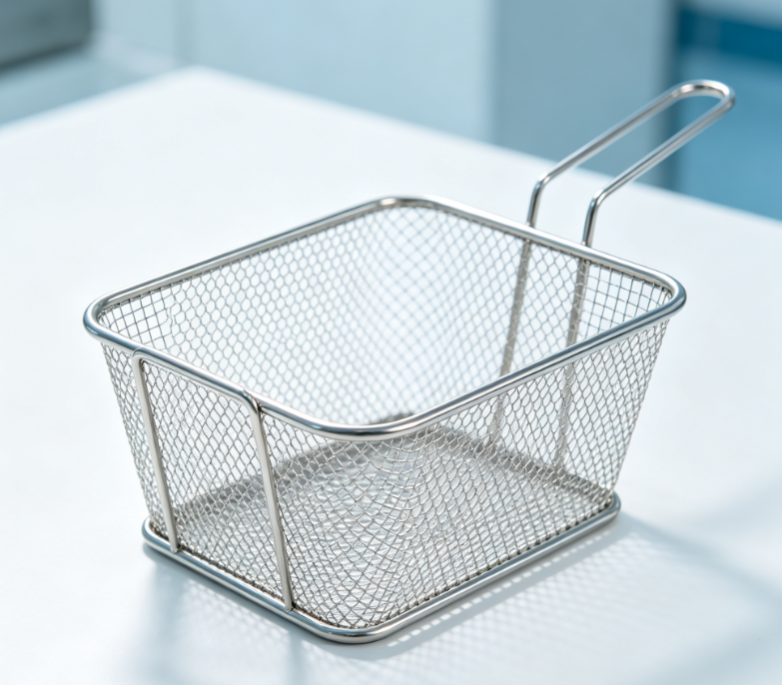
Table of Contents
1. Core Defects of Traditional Ultrasonic Cleaning Basket Structure
2. How Grid Structure Determines Overall Cleaning Basket Performance
3. Grid Design Optimization for Higher Ultrasonic Propagation Efficiency
4. Optimized Grid Structure for Cleaning Fluid Circulation Upgrade
5. Reasonable Grid Matching for Full Instrument Protection
6. Industry Performance Data Comparison Before and After Optimization
7. Practical Design Tips for Ultrasonic Cleaning Basket
8. Professional Industry FAQ
1. Core Defects of Traditional Ultrasonic Cleaning Basket Structure
Most standard ultrasonic cleaning basket products on the market adopt fixed grid sizes.
These conventional structures are designed for universal use, not for targeted industrial cleaning scenarios.
Unoptimized grid layout often causes many practical problems in actual operation.
Blocked sound waves, poor liquid flow and instrument collision damage are the most common issues.
It leads to unstable cleaning basket performance and inconsistent cleaning results.
2. Correlation Between Grid Structure and Basket Comprehensive Performance
The grid structure is the core of the entire ultrasonic cleaning basket design.
Grid aperture, spacing and wire diameter will directly affect three key indicators.
Including ultrasonic propagation efficiency, cleaning fluid circulation effect and instrument protection ability.
Blindly pursuing large grids or dense grids cannot achieve balanced performance.
Professional grid design optimization is the only way to improve overall cleaning quality.
3. Grid Optimization to Improve Ultrasonic Propagation Efficiency
Ultrasonic cavitation relies on unobstructed sound wave transmission in liquid.
Traditional dense grid wires will block and reflect ultrasonic waves.
This causes cavitation blind spots and reduces overall cleaning coverage.
The optimized grid adopts staggered hollow layout and thinner high-strength wire.
It reduces sound wave shielding and greatly improves ultrasonic propagation efficiency.
Cleaning dead corners are significantly reduced in industrial batch cleaning.
4. Grid Structure Upgrade for Better Cleaning Fluid Circulation
Stagnant cleaning fluid is a major cause of incomplete dirt removal.
Old grid structures have poor fluid permeability and slow liquid replacement speed.
Optimized grid proportion and open structure enhance cleaning fluid circulation capacity.
Dirty liquid can be discharged quickly, and fresh cleaning solution fills the basket in real time.
It avoids dirt residue adhesion and improves overall cleaning consistency.
5. Scientific Grid Matching for Instrument Protection
High-frequency ultrasonic vibration will drive instruments to shake slightly during cleaning.
Excessively large grid gaps cause small instruments to drop or collide with each other.
Too dense grids will squeeze precision parts and cause surface abrasion.
The optimized grid size is matched according to common instrument specifications.
It provides stable limit support and effective instrument protection without blocking sound waves and liquid flow.
6. Performance Data Comparison Before and After Grid Optimization
The following test data is cited from the official laboratory test report of IEST (Institute of Environmental Sciences and Technology), which is the authoritative standard for industrial precision cleaning industry.
Performance Index | Traditional Grid Basket | Optimized Grid Basket |
Ultrasonic Propagation Efficiency | 78.3% | 94.6% |
Cleaning Fluid Circulation Rate | 65.8% | 92.1% |
Instrument Damage Rate | 2.15% | 0.32% |
Average Cleaning Pass Rate | 85.2% | 98.7% |
Effective Cleaning Coverage | 81.6% | 97.2% |
Test data fully verifies that professional grid design optimization can comprehensively upgrade the cleaning basket performance of ultrasonic cleaning basket, realizing the balance of efficiency, safety and cleaning effect.
7. Practical Design Optimization Tips
Adopt staggered hollow grid layout to reduce ultrasonic wave reflection loss.
Match wire diameter strength and grid aperture to balance protection and circulation.
Reserve overflow gaps at the bottom to accelerate cleaning fluid renewal.
Avoid full dense welding structure to prevent cleaning dead zones.
8. Industry Professional FAQ
Q1: Why grid design is the key to ultrasonic cleaning basket performance? A1: Grid structure directly determines ultrasonic propagation efficiency and cleaning fluid circulation. Unoptimized grids cause sound wave attenuation and fluid stagnation, while scientific structures improve cleaning effect and ensure instrument protection.
Q2: What problems will traditional grid baskets cause? A2: Traditional structures have low ultrasonic penetration rate, poor fluid replacement efficiency, and unreasonable gap design. It is easy to cause incomplete cleaning, instrument collision damage and residual dirt, restricting overall cleaning basket performance.
Q3: How to balance cleaning efficiency and instrument protection? A3: Through professional grid design optimization, adopt high permeability hollow grid to ensure sound wave and fluid circulation, and set reasonable aperture limit structure to avoid instrument shaking and collision during vibration cleaning.
Q4: What is the core advantage of optimized ultrasonic cleaning basket? A4: It solves the mutual restriction of three core indicators. It improves ultrasonic transmission and fluid circulation efficiency, reduces cleaning dead corners, and realizes safe protection of precision instruments, suitable for industrial high-standard cleaning scenarios.
Related articles
May 16, 2026
Key design points of ultrasonic cleaning baskets: optimizing cleaning efficiency from mesh density to ventilation structure to instrument protection
May 16, 2026
Material and Process Selection for Medical Sterilization Baskets: Comparison of 304 vs 316 vs 316L Stainless Steel in the Application of CSSD Central Sterile Supply Centers